High heat tests trade barriers
'De-risking' measures could raise costs, weaken climate resilience, experts warn
By LIU JIANQIAO | China Daily | Updated: 2026-07-30 07:41


Europe and North America are once again sweltering under intense heat waves, underscoring the urgency of accelerating the green transition. But some governments have erected trade barriers against China's renewable energy technologies and products under the banner of "de-risking".
Experts say such measures risk slowing the deployment of affordable clean energy while raising the costs of climate adaptation for businesses and consumers alike.
About 70 million people in the United States are expected to face excessive heat advisories as dangerously high temperatures scorch much of the country's southern and central regions, The Guardian reported.
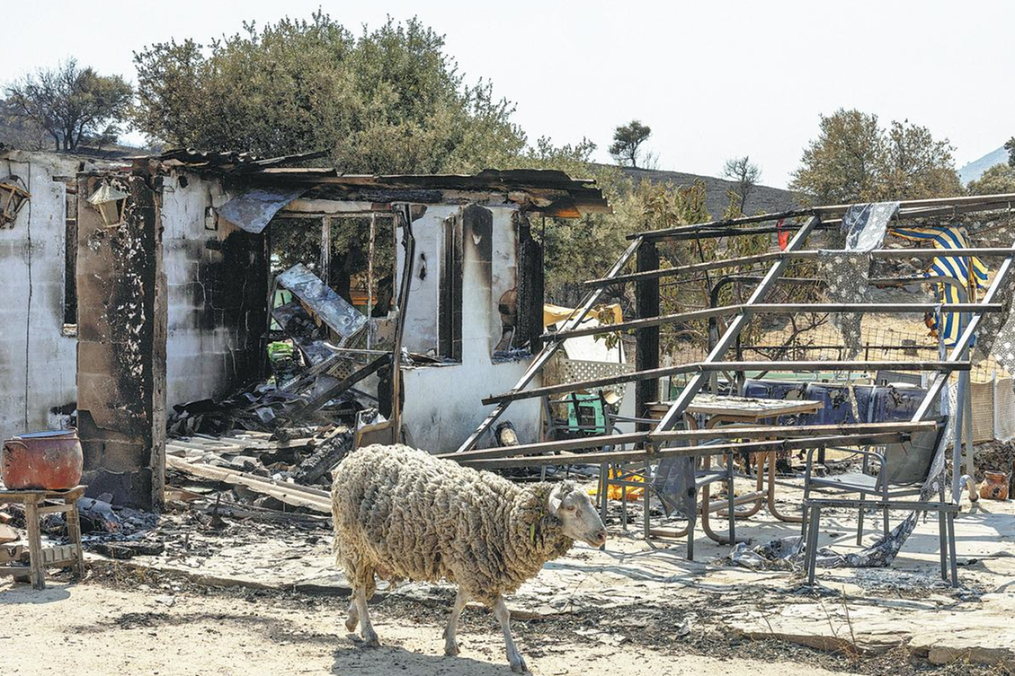
Europe is also enduring extreme heat, with wildfires forcing about 330,000 people to flee their homes in Spain and France. A separate heat wave in June was estimated to have caused some 5,700 excess deaths in France.
The growing frequency and intensity of heat waves in Europe, North America and elsewhere have pushed electricity demand to record highs in recent years, mounting pressure on power grids and complicating efforts to ensure secure and reliable energy supplies, said Xiang Liu, a researcher at the Sichuan Academy of Environmental Policy and Planning.
Against this backdrop, wind and solar power, advanced energy storage systems and power transformers have become indispensable components of modern power grids, providing the infrastructure needed to accelerate the green transition while enhancing the resilience and operational flexibility of power networks, Xiang said.
Backed by integrated supply chains and flexible manufacturing capable of responding rapidly to market demand, Chinese companies have become leading global suppliers of these technologies. However, some European policymakers have voiced concerns over widening "trade imbalances" and the perceived risk of a so-called China Shock 2.0, according to a report by The Washington Post.
Since the second half of last year, the narrative of a "China Shock 2.0" has gained traction among some Western media outlets, politicians and scholars, Xiang said.
"By depicting China's rapid progress in renewable energy, electric vehicles, biomedicine and other high-tech industries as a threat, the narrative has been used to lend support to renewed protectionist policies," he said.
China has built strong competitive advantages in photovoltaics, wind turbines, new energy vehicles and batteries through technological innovation, a highly competitive market, integrated industrial and supply chains, and a vast domestic market, Xiang said.
While advancing its own green transition, China has also supplied global markets with high-quality, cost-effective clean energy products, contributing to global efforts to combat climate change, he said.
Last year, China's exports of the "new three" products — electric passenger vehicles, lithium-ion batteries and solar cells — rose 27.1 percent year-on-year, while exports of other green products surged 48.7 percent.
"The growth was driven by sustained innovation, industrial upgrading and the accelerating global transition toward a greener, low-carbon economy," Xiang said.
Proactive intervention
Nevertheless, the European Union is considering its proposed Industrial Accelerator Act while pursuing countervailing duties on Chinese solar panels and electric vehicles. Such measures risk raising the cost of clean technologies and slowing the shift to low-carbon transport, said He Yun, an associate professor at Hunan University's School of Public Administration.
The EU's strengthened economic security strategy, unveiled in December, introduced six key policy tools under its "de-risking" agenda, marking a shift from passive defense to more proactive intervention, said He, who also serves as a researcher at Tsinghua University's Belt and Road Institute.
"Yet, such an approach comes at a considerable cost," she explained.
"For consumers, the resulting green premium means higher electricity bills and product prices, placing a heavier burden on households, particularly low-income families, as extreme weather makes affordable cooling and clean energy increasingly essential," she said.
Protectionist measures also risk eroding the competitiveness of the EU's green industries by raising production costs and limiting access to competitive technologies, she added.
From a global perspective, trade barriers disrupt the efficient deployment of green technologies, slowing emission reductions and broader efforts to combat climate change, He said.
Solar power generated a record one-fourth of the EU's electricity in June, but the bloc still faces a critical shortage of energy storage capacity, limiting its ability to maximize the benefits of renewable energy, she said.
"In this sense, Europe's de-risking strategy risks sacrificing long-term climate resilience and industrial competitiveness for short-term trade and geopolitical objectives," she said.
As Europe and the US seek to balance industrial security, supply chain resilience and carbon neutrality goals, Xiang said they should first develop an objective and rational understanding of China's growing industrial competitiveness.
"Rather than treating China's technological advances as a threat, they should recognize the opportunities for cooperation in addressing their own demands and shared climate challenges," he said.
Agencies contributed to this story.
liujianqiao@chinadaily.com.cn







Editor's Pick