Yunnan turns tea into tourist trade
World heritage status, ethnic farming wisdom drive revenue on Pu'er's Jingmai Mountain
By YANG ZEKUN in Pu'er, Yunnan | China Daily | Updated: 2026-11-12 08:58


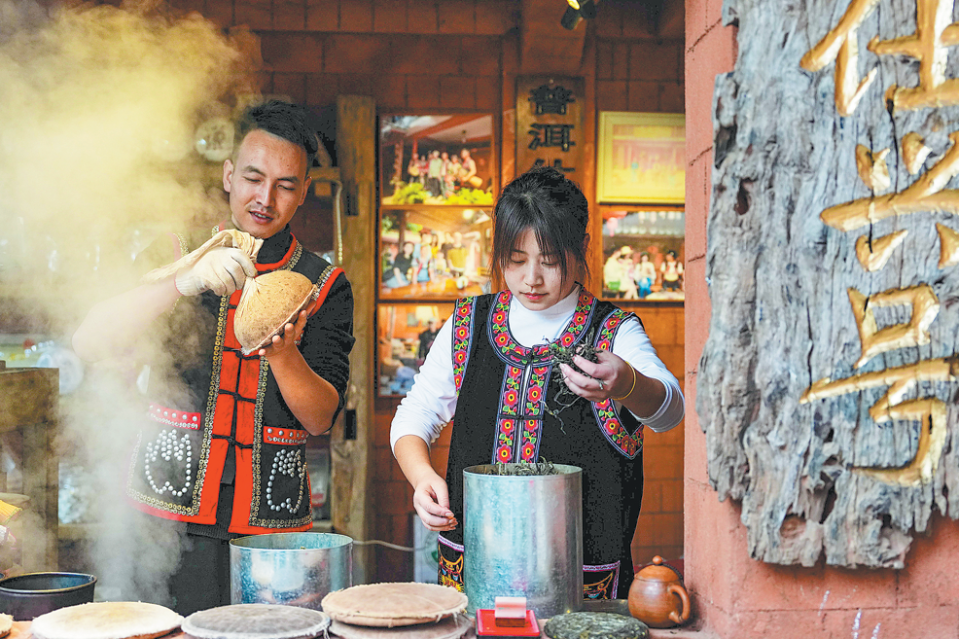
On the slopes of Pu'er's Jingmai Mountain, tea comes in more than just a steaming cup. In Nuogan village, Dai ethnic entrepreneur Xianjin sells her signature Pu'er tea in an ice cream cone. Nearby, a Blang ethnic tea grower and a Dai businessman have joined forces, serving each other's traditional tea under one roof.
The bustling mountain trade was supercharged three years ago after UNESCO added the Cultural Landscape of Old Tea Forests of Jingmai Mountain in Pu'er to its World Heritage List.
On Sept 17, 2023, when the announcement was made, entrepreneur Xianjin watched her modest online tea business transform overnight. Earlier that day, her livestreams generated barely 700 yuan ($100). By midnight, as viewers flooded her channel to buy a piece of the world's newest heritage site, sales topped 130,000 yuan.
Her experience reflects a massive economic shift underway in Southwest China's Yunnan province, as Jingmai Mountain's 1,000-year-old agroforestry system turns into a major tourism driver.
Local government figures show the area recorded 694,300 tourist visits and 563 million yuan in tourism revenue in 2025, nearly doubling average annual incomes for tea-related residents from 15,410 yuan before the listing to about 26,000 yuan afterward.
Yet, this influx of visitors presents a delicate challenge: sustaining an ecosystem built on centuries of minimal human impact while capitalizing on a lucrative commercial boom.








Editor's Pick