Nation's AI policy pulse sets tone for the world
By Ma Si | China Daily | Updated: 2026-03-05 09:01


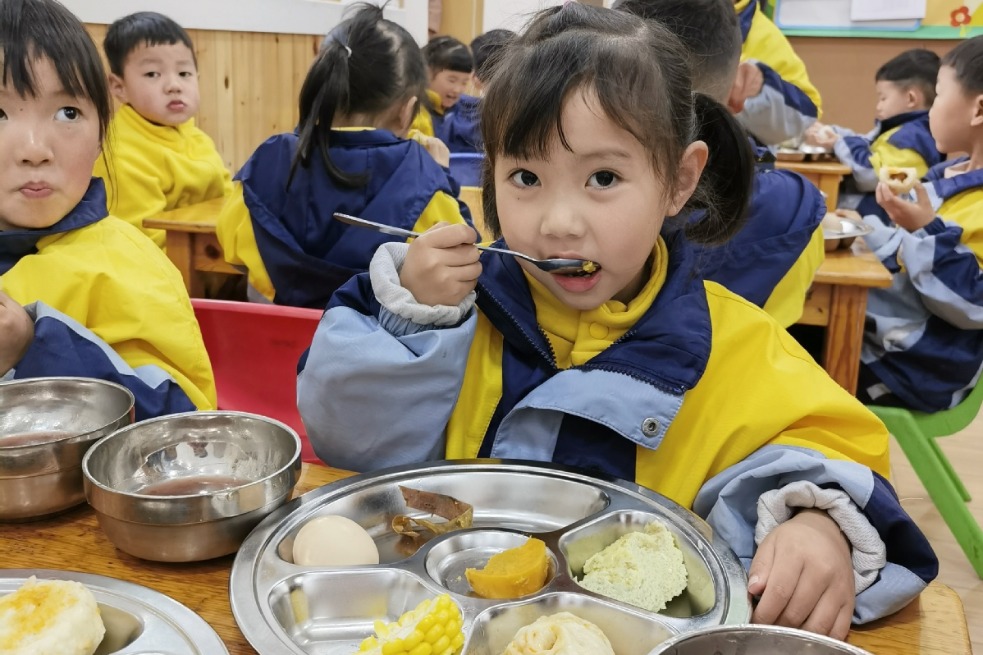
The children's eyes were wide, fixed on the screen. Their teacher had just asked a simple question:"What do you want to be when you grow up?" The answers came in a cheerful chorus — teacher, scientist, firefighter, astronaut. Then, with a few clicks and the quiet hum of an algorithm, the magic happened.
The screen flickered to life, displaying images of each child, aged by 25 years, dressed in the uniform of their dreams. A handsome astronaut saluted the audience. A kind-faced teacher stood before a holographic blackboard. The classroom in Xiangtan, Hunan province, erupted in a collective "Wow!" that seemed to shake the very walls. The story happened when I was reporting a feature on technology in education last year.
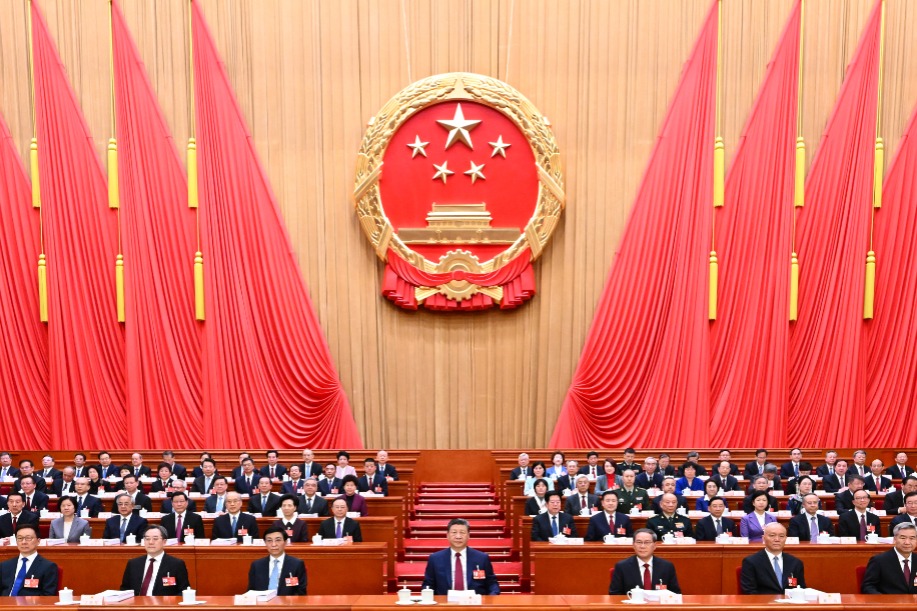
That "wow" has stayed with me, echoing in my mind as I walk the bustling corridors of this year's annual two sessions. The Great Hall of the People has itself become a living laboratory for innovation. Artificial intelligence-powered transcription tools hum quietly in the background, real-time translation earbuds dissolve language barriers, and algorithms help journalists navigate a sea of data.
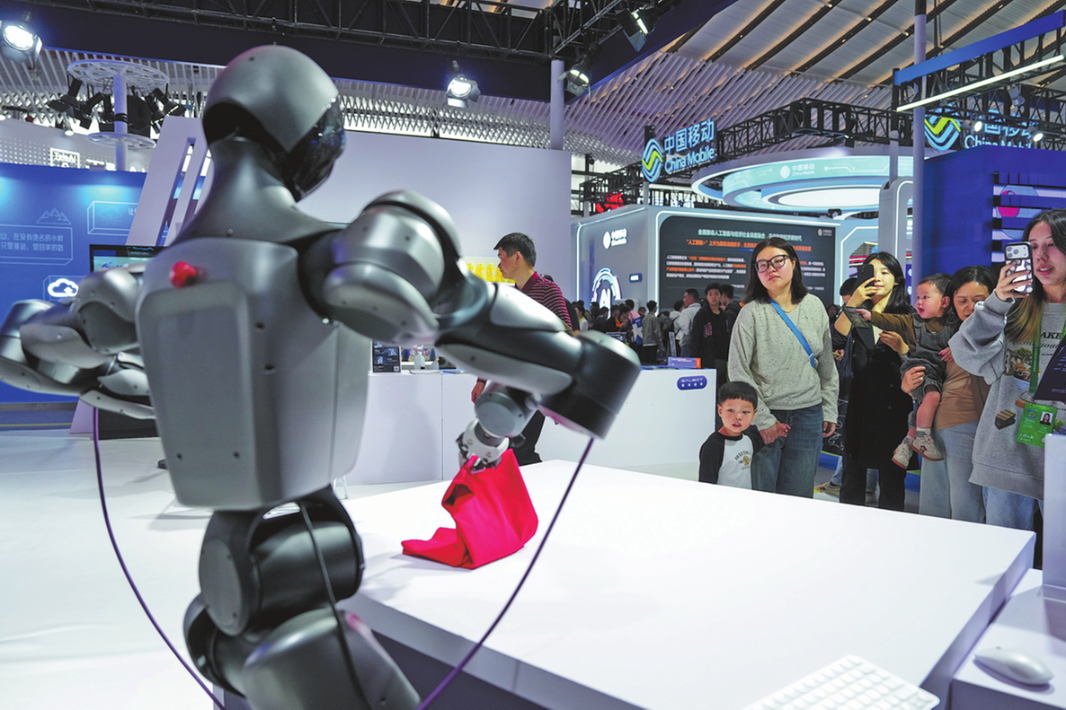
It's a powerful showcase of China's embrace of the latest technology. Yet, beneath the surface of this high-tech pageant, that classroom memory keeps resurfacing, pushing me to consider a deeper question: amid all this innovation, what kind of AI does the future of China truly need?

The answer, I believe, lies in the collective "wow" from that classroom. China's relationship with technology is unlike anything I've seen elsewhere. Foreign technology executives and scholars I have interviewed consistently express astonishment at one thing: the Chinese consumers' insatiable appetite for the new. They are eager to try, willing to pay, and quick to integrate novel experiences into daily life. This is not a top-down phenomenon but a vibrant, symbiotic cycle.
The data backs it up. In a striking week from Feb 9 to 15, Chinese AI models processed 4.12 trillion tokens, surpassing the 2.94 trillion tokens processed by their US counterparts for the first time, according to data from the US company OpenRouter. The very next week, China's lead widened to 5.16 trillion tokens against the US' 2.7 trillion.
This immense, real-world validation from hundreds of millions of users is the jet fuel powering China's AI engine, emboldening companies to innovate alongside their users. This grassroots energy finds its perfect partner in the steady guidance of policy.
The 2025 Government Work Report unveiled efforts to implement the "AI plus" plan, weaving AI into the fabric of the economy and society. It envisions a future built on human-machine collaboration — and that brings me back to the classroom.
That teacher's simple act of using AI to visualize a child's dream is a perfect microcosm of the "AI plus" spirit.
It is not about replacing the teacher, but amplifying her magic. It is about using an abstract but powerful tool to deliver a moment of pure, intimate human connection. Every dream deserves to be nurtured, and AI is becoming one of the most powerful watering cans we have.
As I watch foreign diplomats and reporters observing this week's proceedings with keen interest, I'm reminded that the two sessions have never been just for China. The direction set here for a technology as transformative as AI will ripple across the globe.
What kind of AI do we want for the future? The ultimate goal, many scientists argue, is to create a general intelligence capable of navigating the world's infinite complexities.
But the path to that goal requires us to first understand what it means to be human. We can give this new intelligence a "heart" — a core of values drawn from the profound wisdom of Chinese civilization.
The ultimate ambition, then, is not just to create world-changing technology, but to create it with Chinese thought, for the benefit of the world. It is to build an AI that, like that dedicated teacher, can look at a room full of dreams and help make them real.
Contact the writer at masi@chinadaily.com.cn
Photo