War widens as US, Iran trade attacks
Yemen's Houthis declare blockade on Saudi ports, stoking regional tensions
By CUI HAIPEI in Dubai, UAE, and JAN YUMUL in Hong Kong | China Daily | Updated: 2026-07-22 09:50


Escalating tit-for-tat strikes have pushed the United States and Iran further into conflict as the US carried out its latest round of raids on Monday, while Iran targeted US assets across the Gulf.
Even amid continuing mediation efforts, a maritime blockade of Saudi Arabia's ports declared by Yemen's Houthi militants has stoked fresh risks to global energy supply chains.
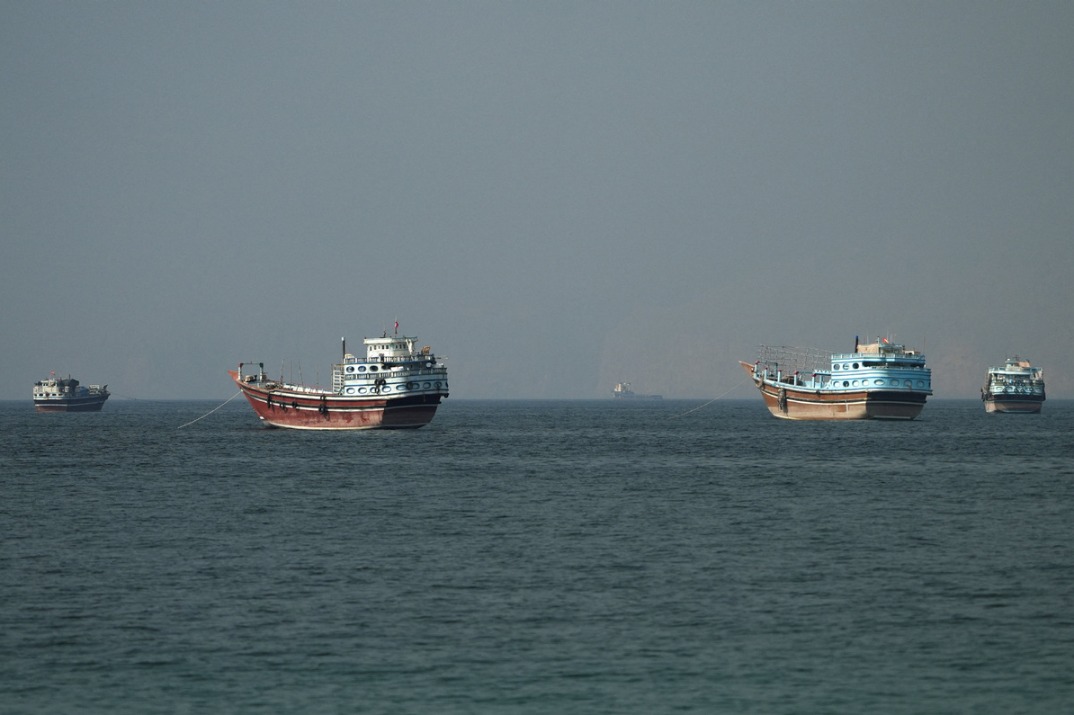
The US Central Command said late on Monday that its 10th consecutive night of strikes aimed to "further degrade Iranian military capabilities used to attack commercial shipping" in the Strait of Hormuz. Iran's state-run IRNA news agency reported explosions hit Sirik, Bandar Abbas, Qeshm Island, Chabahar and Konarak in southern and central Iran.
Hours later, Iran's Islamic Revolutionary Guard Corps announced retaliatory strikes on US assets in Kuwait, Bahrain and Jordan, including air defense systems, radar installations and administrative buildings. It also confirmed intercepting two "noncompliant oil tankers" attempting passage through the Strait of Hormuz.
In another statement carried by the Tasnim News Agency, the IRGC claimed it destroyed the central data infrastructure of US company Amazon in Bahrain using cruise missiles. Bahrain, the US and Amazon have yet to issue any response to the allegation.
Earlier on Monday, US President Donald Trump warned Iran would pay "many times over" for any US troop fatalities, after at least three service members were killed in recent assaults. CNN reported that Trump was weighing options to escalate military pressure, while the Pentagon has deployed additional fighter jets and aerial refueling tankers to the region.
Meanwhile, Iran's President Masoud Pezeshkian declared a "full-scale war" with the US. "We must be realistic and accept the natural consequences of this resistance," he said.
However, glimmers of hope appeared on the diplomatic front as Iran's Interior Minister Eskandar Momeni arrived in Pakistan for a two-day visit. Mediators including Pakistan, Qatar and Egypt have floated the prospect of a 10-day truce to ease tensions and encourage a return to negotiations, US media outlet Axios reported, citing people familiar with the matter.
Iran's Foreign Ministry confirmed earlier that Tehran has received mediation drafts and is keeping its diplomatic channels open.
The Middle East crisis was also spotlighted at a gathering in Southeast Asia on Tuesday, where foreign ministers from the Association of Southeast Asian Nations and major partners voiced "serious concern" over the renewed hostilities and called for "a peaceful resolution through dialogue and diplomacy".
"We called on all parties concerned to exercise utmost self-restraint and avoid any acts that may further aggravate the situation," the ministers said in a joint statement.
Global oil prices briefly hit a one-month high on Monday before edging lower early on Tuesday. A new supply risk has surfaced after Yemen's Houthi militants announced a maritime blockade targeting Saudi Arabia's ports on Monday.
The group said it would cut off shipping routes linking the Red Sea and Gulf of Aden, in retaliation for a strike on Sanaa International Airport last week, which it blamed on Saudi Arabia.
Such a move would put at risk Riyadh's ability to bypass the Strait of Hormuz for some of its oil exports and have major repercussions on the global economy. Saudi Arabia strongly condemned the threat, accusing the group of making false claims and warning that threats targeting shipping lanes violate international law.
'Unforeseen escalation'
Also on Monday, the US State Department urged citizens around the world to "exercise increased caution" over the war with Iran. It said "the security environment remains complex with the potential for unforeseen escalation" because of heightened tensions.
Meanwhile, domestic polling showed the US public largely opposes the Iran war.
A Washington Post-Ipsos poll last week showed that 68 percent of respondents believe the war is "not worth fighting", with only 28 percent offering support.
The 40-point gap surpasses public disapproval levels seen during the Iraq and Afghanistan wars. At the peak of anti-war sentiment over Iraq in 2007, nearly 66 percent of US people opposed the conflict.
Notably, the higher numbers against the war in Afghanistan did not peak until almost eight years into the conflict. By contrast, CNN reported just two months into the Iran campaign, 61 percent of US citizens already view it as "a mistake".
Shi Guang in New York contributed to this story.
Contact the writers at cuihaipei@chinadaily.com.cn





Editor's Pick