Middle East sea routes face mounting turmoil
Growing tensions disrupt crucial waterways, raising energy security risks
By JAN YUMUL in Hong Kong, CUI HAIPEI in Dubai, UAE, and LIU JIANQIAO in Beijing | China Daily | Updated: 2026-07-24 08:59


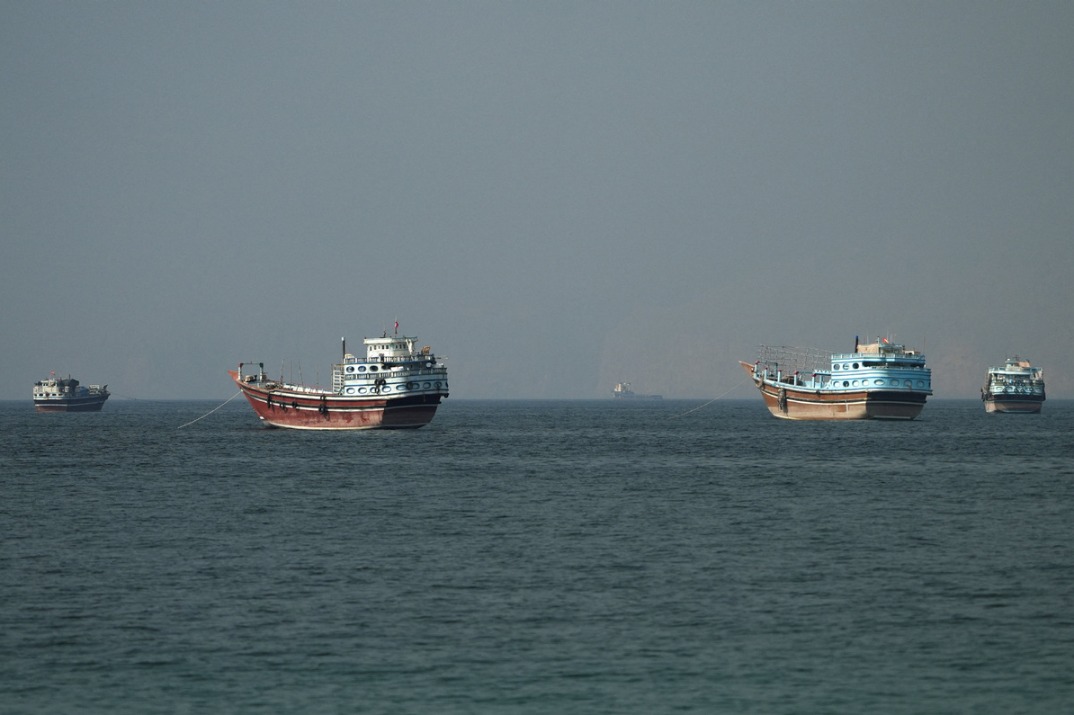
Maritime security in the Middle East is deteriorating further amid the US-Iran war, as disruption expands beyond the Strait of Hormuz to the Red Sea, raising fresh concerns over global energy supplies.
The latest incidents threaten two of the world's most critical oil shipping routes, adding to market jitters and prompting renewed concerns from the International Energy Agency.
Yemen's Houthi group said on Thursday that it had targeted two Saudi oil tankers in the Red Sea, claiming the vessels violated its recently announced maritime restrictions. The Red Sea carries about 7 percent of global oil supplies.
In a statement aired by the group's Al-Masirah television, Houthi military spokesman Yahya Sarea said the Houthis struck the tankers, identified as Encelia and Layla, using "ballistic and cruise missiles as well as drones". He claimed the attacks set both vessels ablaze and achieved the group's objectives.
Saudi Arabia has not commented on the Houthi claim. However, the United Kingdom Maritime Trade Operations said on X that it had received a report of an incident involving a tanker about 130 kilometers southwest of the Saudi port of Al Shuqaiq.
The vessel's master reported being struck by an "unknown projectile", causing a fire that the crew tried to extinguish, the organization said.
The Houthis' claim came two days after the group expanded its maritime restrictions to target vessels trading with Saudi ports, citing an attack on Yemen's Sanaa International Airport.
Separately, Iran's Islamic Revolutionary Guard Corps said on Thursday that one of three oil tankers attempting to transit a mine-laden route in the Strait of Hormuz caught fire, while the other two turned back.
The IRGC said the strait was "under our control" and would remain closed as long as "the evils of the United States" continued in the region. It warned that any tanker attempting to pass without coordinating with Iran would "suffer the same fate" and urged Washington to "stop hostile actions in this sensitive region".
The developments came as US President Donald Trump vowed to bomb Iranian infrastructure whenever Tehran targets a ship in the critical waterway, and as the US and Saudi Arabia signed an agreement to cooperate on developing a civilian nuclear program in the kingdom.
Worrying situation
"If I were a country dependent on oil and gas imports, I would be very worried regarding the latest re-eruption of tensions in the Middle East," said Syed Muhammad Osama Rizvi, a global market and product strategist at energy intelligence firm Primary Vision.
Rizvi said the global refinery capacity remains constrained, while refining margins and crude oil prices have surged. Iran holds the "upper hand by sheer stroke of geography", he said, warning that the Red Sea could "become another avenue of war soon".
Ding Long, a professor at Shanghai International Studies University's Middle East Studies Institute, said the attacks on commercial vessels in the Strait of Hormuz stem from a deeper dispute over control of the strategic waterway.
The US and Iran hold fundamentally different interpretations of the provisions on the strait's administration under a memorandum of understanding signed last month. Tehran has sought to strengthen its jurisdiction by requiring vessels to register and proposing transit fees, measures Washington rejects, Ding said.
"These competing positions reflect the two sides' broader geopolitical rivalry and their conflicting strategic interests in the Gulf region," he said.
Meir Litvak, a senior research associate at the Alliance Center for Iranian Studies at Tel Aviv University in Israel, said the Trump administration may lack patience for prolonged negotiations and could settle for vague formulas to claim success, as neither side appears willing to make major concessions on key issues.
International Energy Agency Executive Director Fatih Birol said in a statement on Tuesday that the agency is closely monitoring oil markets.
"The escalation in hostilities affecting the Strait of Hormuz and energy infrastructure in the region increases security of supply concerns and uncertainty over the market outlook," Birol said.
Contact the writers at jan@chinadailyapac.com








Editor's Pick