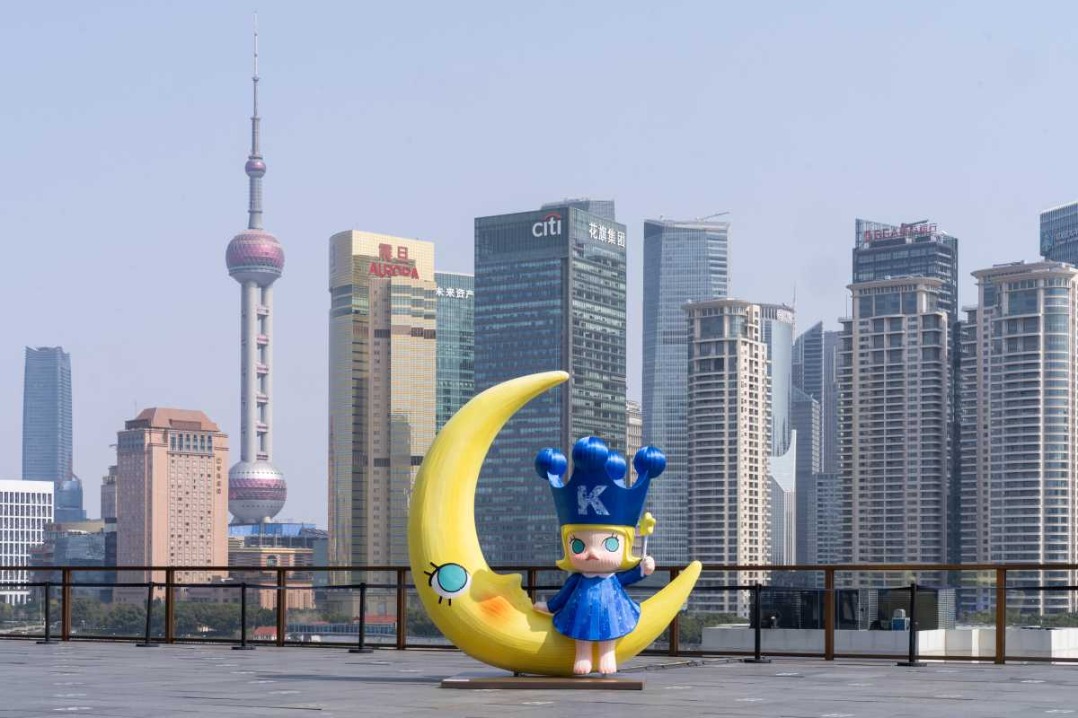
Building urban resilience under extreme climate change
By Li Ting | China Daily | Updated: 2026-07-27 09:27


As summer approaches, the world is once again bracing for extreme heat. With a powerful El Nino event taking shape and climate models indicating further intensification, unprecedented temperatures are no longer a distant projection — they are an immediate reality.
Scientific records show that the 10 warmest years since modern measurements began in 1850 have all occurred within the past decade. Remarkably, 2023, 2024 and 2025 were consecutively the hottest years ever recorded.
This trend reflects a broader shift: climate risk is no longer merely an environmental issue discussed in scientific journals. It has become a pressing operational, financial, and asset-related risk for businesses and governments alike.
Prolonged heatwaves can halt industrial production, disrupt supply chains and dramatically increase the cost of maintaining comfortable indoor environments. Against this backdrop, a fundamental question emerges: is our energy system resilient enough to withstand increasingly frequent and prolonged climate extremes?
China has prepared a solid action-based answer to this question, which is its extraordinary progress in advancing energy transition towards a cleaner and more resilient future.
Over the past decade, the country has built the world's largest and most comprehensive renewable energy supply chain. Renewable energy now supplies roughly one-third of the nation's electricity consumption. Wind and solar power generation have each exceeded one trillion kilowatt-hours annually. Through the construction of a "new power system", China is striving to balance green development, energy security, and social well-being.
Yet even with these remarkable achievements on the supply side, the energy system is still facing a growing challenge from the demand side, particularly in terms of summer cooling loads. As living standards improve and heatwaves become more frequent, air-conditioning demand has emerged as one of the largest sources of peak electricity consumption. In several major cities, cooling demand during peak periods now accounts for more than 40 percent of total electricity load.
The challenge has become even more evident this year. Driven by early heatwaves and El Nino conditions, Guangdong province became the first province in China's history to exceed peak electricity demand of 160 million kilowatts, nearly two months earlier than the traditional summer peak. Air-conditioning loads alone surpassed 47 million kW, accounting for more than 30 percent of total demand. Other areas — including Guangxi Zhuang autonomous region and the provinces of Yunnan, Guizhou, and Hainan — have also hit new highs.
Research further shows the nonlinear relationship between temperature and electricity demand. In southern grid systems such as Guangdong, every 1 C increase below 30 C adds approximately 1-3 gigawatts of demand. Once temperatures exceed 30 C, however, each additional degree can increase electricity demand by as much as 3-4.5 GW as cooling systems work harder.
These trends underscore an important reality: in an era of climate extremes, expanding electricity supply alone is no longer sufficient. Demand-side flexibility has become equally, if not more critical. The opportunity requires a fundamental shift in perspective. Electricity users must evolve from passive consumers into active participants in the energy system.
Through intelligent control systems, distributed battery storage and demand-response technologies, buildings can help reduce grid stress while lowering their own energy costs.
This opportunity is particularly significant in China, which possesses the world's largest building stock, exceeding 65 billion square meters of residential and commercial floor area. Buildings account for over one-fifth of the country's total energy consumption, making them not only major energy users, but also a vast, underutilized source of system flexibility.
Grid-interactive efficient buildings become resilience assets for the entire power system. During extreme heat events, smart buildings act as shock absorbers for the grid. Slight adjustments to air-conditioning settings or nonessential lighting can collectively free up substantial capacity across a city.
Buildings and flexible loads such as electric vehicle charging stations also facilitate the integration of renewable energy by shifting loads, storing surplus electricity and discharging it back into the grid, creating a dynamic balance between electricity supply and demand. RMI estimates that fully unlocking building load flexibility could reduce national peak demand by at least 10 percent. Such a reduction could avoid roughly 500 billion yuan ($73.62 billion) in additional investments in traditional power infrastructure and reduce annual carbon emissions by more than 200 million metric tons.
Encouragingly, market mechanisms needed to unlock this potential are already taking shape. Shanghai's Huangpu district offers a pioneering example. The district has established China's first virtual power plant for commercial buildings, aggregating flexible resources from approximately 150 large buildings and creating more than 60 megawatts of adjustable capacity.
Shenzhen, Guangdong province, is scaling this model even further. More than 60,000 flexible resources — including rooftop solar, EV charging infrastructure and commercial building HVAC systems — have been connected to the city's demand management platform. Since 2023, the system has carried out over 100 demand-response events, generating more than 18 million yuan in economic benefits while delivering substantial emissions reductions.
As climate change intensifies, energy resilience will become a central challenge for cities worldwide. Achieving this vision requires a shift in mindset — we are not merely beneficiaries of the clean-energy transition, we are active participants in creating resilient communities. Buildings, businesses, and households all have roles to play in strengthening the systems upon which modern life depends.
Importantly, this challenge is global. Cities worldwide are facing similar pressures from rising temperatures and surging cooling demand. By pioneering virtual power plants, deploying grid-interactive buildings, and leveraging market mechanisms to balance supply and demand, China is doing more than strengthening its own energy security. It is helping to establish a replicable model for climate resilience — one that demonstrates how technological innovation and human well-being can advance together.
Ultimately, energy resilience is the bridge that connects climate adaptation, economic prosperity and sustainable development. In an era of rising temperatures, building resilient cities and energy systems will determine not only how we endure the climate crisis, but how we thrive through it.
The writer is chief representative and managing director of RMI China.
The views do not necessarily reflect those of China Daily.





Editor's Pick