Stargazers find answers in detailed urban guide
By XU LIN | China Daily | Updated: 2026-10-07 11:23


Imagine wanting to stargaze in your city, but not knowing where to go, how to observe, what to see each season, or who to ask for tips. With the newly published China Stargazing Guide, such worries are a thing of the past.
The guide, which claims to be the country's first original stargazing guidebook rooted in China's geography and based on firsthand information, comes from three years of fieldwork by more than 200 astrophotographers and science communicators nationwide.
The China StarVision Alliance, or CSVA, a domestic platform for nearly 1,000 Chinese astrophotographers, collaborated with Posts & Telecom Press to compile the guide.
The guide is organized around three questions that puzzle most stargazing beginners: when to look, where to go, and how to observe.
The first section explains the characteristics of each season's night sky. The second details more than 500 stargazing sites in and around 34 cities, helping urban readers find the ideal spot, with firsthand stargazing information and hand-drawn maps marking key sites. The third is a step-by-step guide to observing the stars, with celestial knowledge and hands-on tips.
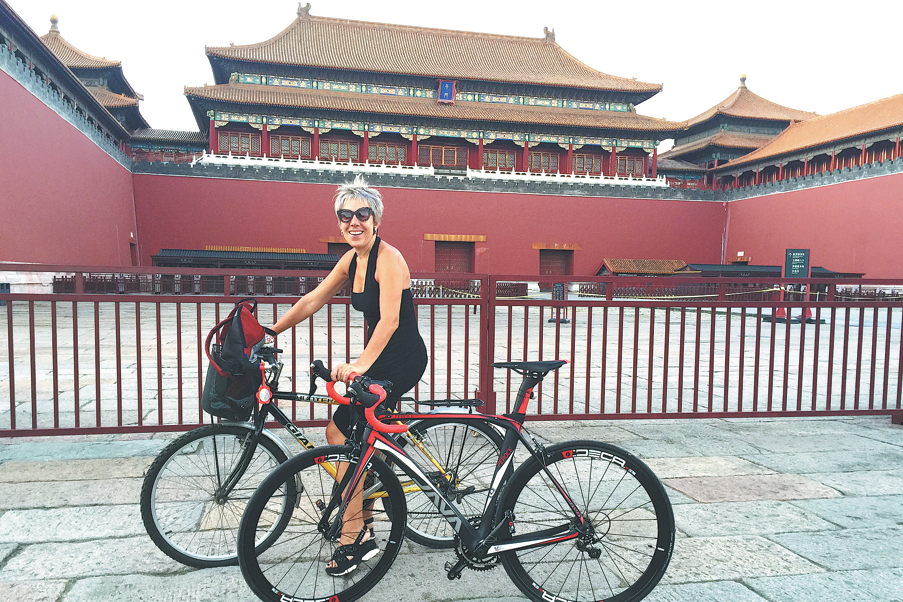
According to the guide, one of downtown Beijing's most iconic stargazing sites is the Meridian Gate, or the Forbidden City's south entrance. On clear nights, once the complex's exterior lighting switches off, you can spot many bright stars above the gate.
For Beijing suburbs, the guide recommends places such as the ancient Changyucheng village in Changping district, with the Great Wall nearby, and the Baihua Mountain scenic area in Mentougou district which offers stargazing opportunities on and at the foot of the mountain.
The book targets urban readers, especially those in provincial capitals and second- and third-tier cities.
With the book, readers can choose the best-suited stargazing destination and season and gain basic knowledge of the starry sky, including what causes meteor showers.
Each of the more than 300 astrophotographs featured in the book, taken nationwide, was shot on-site with professional skill, turning the stargazing guide into a printed showcase of China's most beautiful night skies.
"What makes the guide so valuable is that it is not one person's vision of the starry sky, but a collective undertaking by hundreds of astrophotographers, science communicators and on-the-ground pathfinders," Gou Lijun, a researcher at the Chinese Academy of Sciences' National Astronomical Observatories, wrote in a blurb about the book.
"For the first time, those who photograph the stars, those who understand them, and those who know the land beneath their feet have been brought together. Through footsteps, lenses and years of patient watching, they have mapped more than 500 verifiable stargazing sites across the country, telling readers where the stars are, when to watch them, and how. For public stargazing and astronomy education, this is a guide truly grown from China's own land and night sky," Gou wrote.
Jiang Chenming, a co-founder of the CSVA, says the hardest part of the book project was collecting information. "More than 500 stargazing sites are listed in the book, which means an enormous amount of firsthand, detailed information. It's very time-consuming to collect, verify, edit, and process all the information for each site."






Editor's Pick