Chinese brands become cool in Europe
Industrial alliances unlock localized product breakthroughs, answering rising demand in surging home appliance market
By XING YI in Stuttgart, Germany | China Daily | Updated: 2026-06-20 06:53


As Europe braces for another summer of extreme heat, Dong Yunjun has already witnessed a telling sign of changing consumer habits.
Looking out from his office in Stuttgart, Germany, the head of the Midea Europe Research Center's residential air conditioning team spotted several portable air conditioners hanging outside the windows of a nearby building.
"It was the moment we knew our products had succeeded," Dong said. "And we expect a very good season this year."
The product he saw was called PortaSplit, co-designed by Chinese and European engineers. Weighing 10 kilograms, its outdoor unit can be mounted on a bracket outside a window without drilling. The entire process can be completed without professional installation.
The product's first edition was launched in the summer of 2024, with the aim of solving the hassle of installing air conditioners in Germany and many other European countries, where summer temperatures were once milder and many homes are not equipped with air conditioning.
As extreme heat continues to spread and break records due to climate change — with Paris and London hitting record-high May temperatures last month — more Europeans are looking for cooling solutions.
This year, Midea launched an even smaller version called PortaSplit Cool.
"After the product launched, searches for 'Midea' on Google increased 20-fold in Germany," said Dong, adding that it also began selling in Denmark, France, Italy, and the Netherlands.
"Our strategy in Europe now is to make breakthroughs through innovation, instead of low prices," he said. "Because our brand won't be remembered if we only follow others."
The portable air conditioning unit was just one of many home appliances from Chinese brands that have been gaining popularity across Europe, appreciated not only for their value but for their quality and innovation.
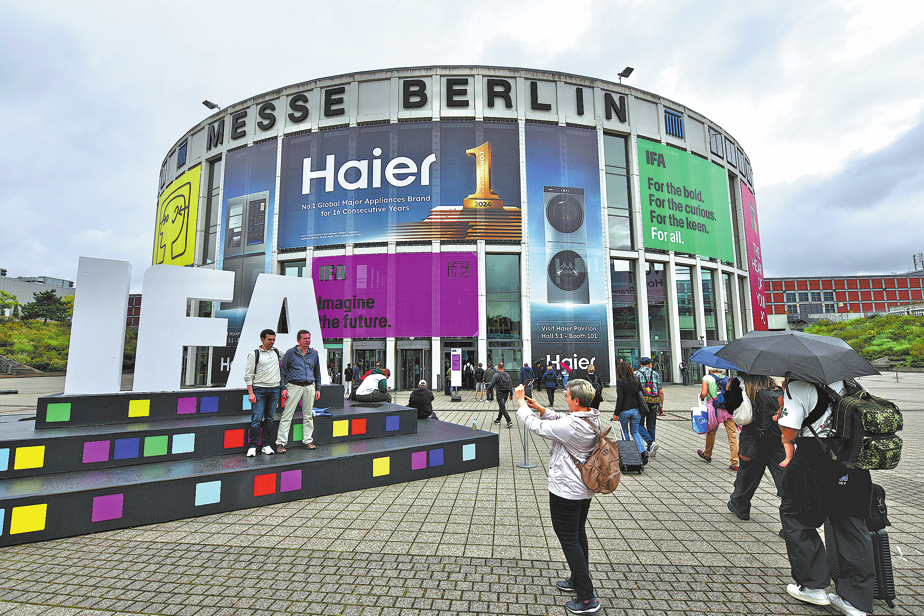
A clear sign of this trend was visible at the 2025 Internationale Funkausstellung Berlin, or IFA, Europe's largest consumer electronics exhibition.
Major Chinese brands displayed prominent advertisements, booked some of the largest exhibit spaces, and showcased a range of innovative products, including AI-powered smart home appliances, new-generation displays and robotics.
Some 700 Chinese companies participated, accounting for more than 30 percent of all exhibitors. Observers noted that the IFA has become a key platform for Chinese companies looking to strengthen their presence in Europe and expand international cooperation.
"In the past, most Chinese consumer electronics companies entered international markets as original equipment manufacturers or by offering cost-effective products," said Zhu Keli, director of the China Institute of New Economy. "But now they mainly focus on innovation."
At the trade show's highly anticipated Global Product Technology Innovation Awards, Chinese brands, including Midea, Hisense and TCL, received gold awards alongside companies such as Bosch and Siemens.
Continuous evolution
Oliver Pearce, the London-based executive director of iMpact, a consultancy dedicated to helping Chinese enterprises explore overseas markets, described this latest wave of Chinese companies going global as a continuation of a trend that began in the 1990s.
With the trend in the 1990s seeing Chinese companies building roads and dams abroad and acting as original equipment manufacturers for foreign brands, they were less visible before the 2010s.
Pearce recalled that when he moved to China in 2009, his Chinese friends liked to show off their Samsung or Siemens appliances.
"The average middle-class family in Beijing and Shanghai back then still preferred to buy foreign brands because they believed they were better," Pearce said.
Chinese brands have evolved over the past decade. While still exporting functional, low-cost products in the 2010s, they worked to upgrade their products. Once they had better innovations, they focused on overseas markets.
"They've learned from the Chinese market and are now capable of exporting products that truly reflect domestic innovations that resonate with international consumers," Pearce said.
Similar to the big multinationals that built factories and R&D centers in China during the past two decades, many Chinese brands are doing the same in Europe, innovating for local customers.
"Europe is quite diverse. That's something we always have to tell our headquarters," said Manuel Seethaler, head of public relations and strategy for Midea Europe Research Center's residential air conditioning team. "There is no one-size-fits-all solution for European markets."







Editor's Pick