Jingdezhen porcelain sites join UNESCO World Heritage List
By Wang Ru | chinadaily.com.cn | Updated: 2026-07-25 11:45


The Jingdezhen Handicraft Porcelain Industry Sites were inscribed on UNESCO's World Heritage List on Saturday during the 48th Session of the World Heritage Committee in Busan, South Korea, becoming China's 61st World Heritage site.
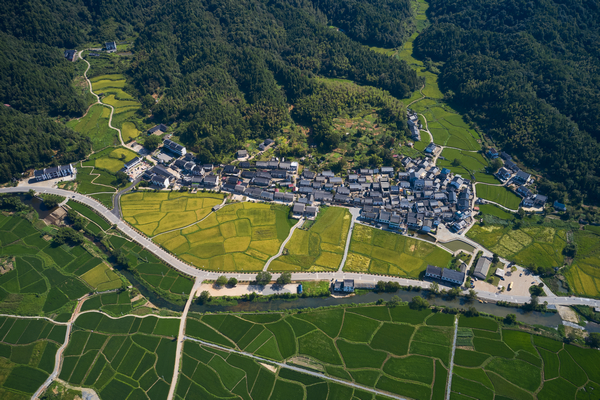
Located across the hilly landscape of Jingdezhen in East China's Jiangxi province, the property preserves a complete handicraft porcelain production system that flourished between the 10th and 19th centuries. Rich deposits of porcelain stone and kaolin clay, together with an extensive water transport network, helped transform the city into the world's foremost center of porcelain production.
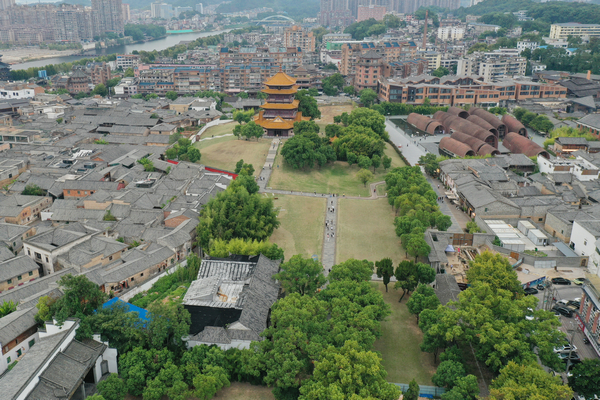
The heritage property comprises 45 component sites spread across 1,979 hectares, ranging from porcelain workshops in the historic urban center to raw material extraction sites, transportation routes and traditional neighborhoods that together illustrate the industry's full production chain.
The World Heritage Committee recognizes the site under UNESCO's cultural criteria No 2, 3, 4, and 6.
According to Wei Qing, the author of the World Heritage nomination dossier, Jingdezhen represents an exceptional and unparalleled example of technological innovation, artistic achievement, and industrial organization in porcelain production from the 13th to the 19th centuries.
Drawing on the dome-shaped kilns of northern China and the dragon-shaped kilns of the south, Jingdezhen potters developed the gourd-shaped kiln, which later evolved into the highly efficient egg-shaped kiln capable of firing different types of porcelain simultaneously.
As kiln technology advanced, so did the ceramics themselves. From the bluish-white wares of the Song Dynasty (960-1279) to the blue-and-white ceramics of the Yuan Dynasty (1271-1368), the painted porcelain of the Ming Dynasty (1368-1644) and the famille-rose and enamel wares of the Qing Dynasty (1644-1911), Jingdezhen continually expanded the possibilities of porcelain craftsmanship.
"It is this spirit of innovation that has kept the kilns of Jingdezhen burning," says Wang Guangyao, a ceramic archaeologist at the Palace Museum in Beijing.

Wei says Jingdezhen's success was also built on cross-cultural exchange. The city combined ceramic traditions from northern and southern China, incorporated pigments introduced from the Middle East and Europe, and blended domestic and foreign decorative aesthetics.
Blue-and-white porcelain is one of the best examples. Produced by combining China's porcelain-making techniques with Persian cobalt blue pigment, it became a defining influence on the "chinoiserie" style that flourished in European decorative arts throughout the 17th and 18th centuries.
At the Guanyinge kiln site, archaeologists have discovered Kraak porcelain, ceramics produced specifically for European markets during the Ming and Qing periods, confirming the site's role as a major center for export-oriented production.
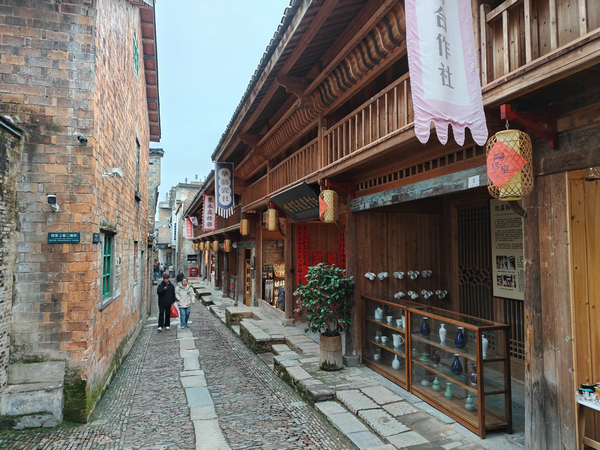
"In this way, Jingdezhen porcelain became a medium for sharing Chinese civilization and culture with the world," says Wei.
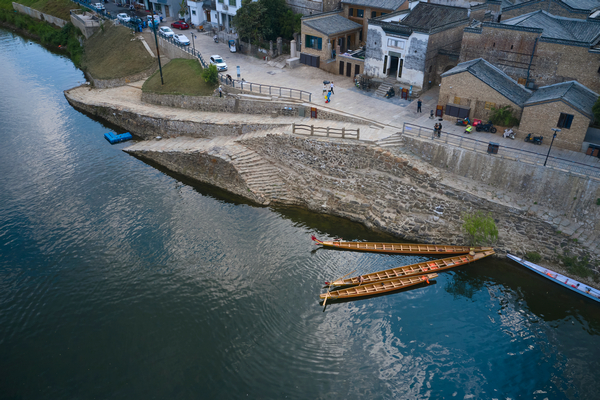
The industry also reflects the sophisticated organization of traditional Chinese manufacturing. While porcelain was produced in Jingdezhen's urban center, raw materials came from nearby mountains and were transported through waterways, forming an integrated industrial system.
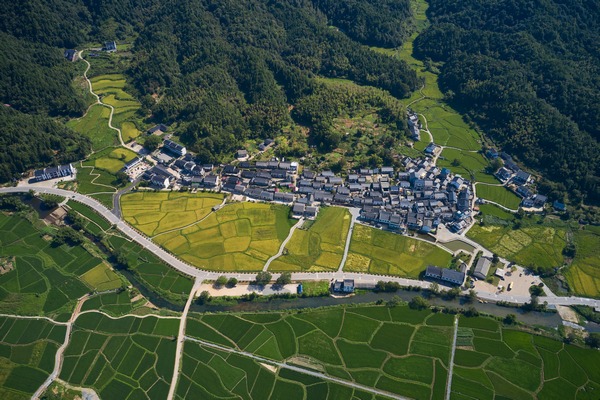
To illustrate this complete production network, the World Heritage property includes not only the Town Area Porcelain Production Center, but also the Hutian Ancient Kiln Site, the Gaoling Porcelain Clay Mining Site, the Changling Porcelain Stone Mining Site, and the Jiaotan Firewood Production Area.

The Chinese government has made tremendous efforts in the protection of the property. The protection work has lasted for nearly half a century, and the application for World Heritage status has taken 11 years.
"Applying for World Heritage status has helped us better understand how Jingdezhen's porcelain industry evolved into China's ceramics capital," says Wang Tongmao, director of Jingdezhen Municipal Leading Group Office for World Cultural Heritage Nomination. "That understanding provides a stronger foundation for future conservation efforts."
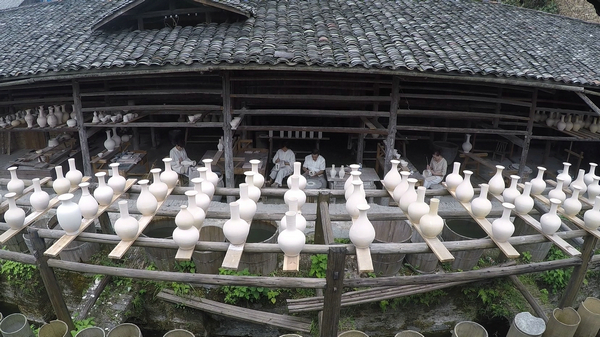
Deng Chao, head of the world cultural heritage department of the National Cultural Heritage Administration, says the successful inscription also demonstrates how heritage protection can drive urban renewal. "The World Heritage application has helped Jingdezhen transform itself from a declining industrial city into a vibrant center where traditional craftsmanship and modern industry coexist. It is a powerful example of how cultural heritage can contribute to economic and social development."
"It is also important to identify and nurture local cultural resources, make them the cornerstone of regional economic and social progress, so that heritage conservation can go hand-in-hand with urban development," he adds.
Zhao Ruinan contributed to this story.




Editor's Pick