Shangri-La's mushrooming reputation
Highly-prized forest delicacy links mountain communities to tourism opportunities, Asian market
By YANG FEIYUE and LI YINGQING in Diqing, Yunnan | China Daily | Updated: 2026-08-19 07:13


Ngawang Duchin moved slowly through the forest in Shangri-La, Yunnan province, scanning the ground beneath towering pine trees.
In Jidi village, Diqing Tibetan autonomous prefecture, pine needles carpeted the forest floor and chestnut trees lined the mountain slopes at an altitude of 3,300 meters. Summer mist drifted across the ridges.
To an untrained eye, there was little difference between one patch of forest floor and another. But since July, 38-year-old Ngawang has been searching for signs of what was hidden beneath it. The Tibetan villager suddenly stopped, crouched down and brushed away a thin layer of pine needles.
"The ground is slightly raised here. When it bulges like this, there is usually something underneath," he said.
He carefully loosened the soil and a small brown mushroom slowly emerged, its cap still partly closed and covered with traces of forest earth.
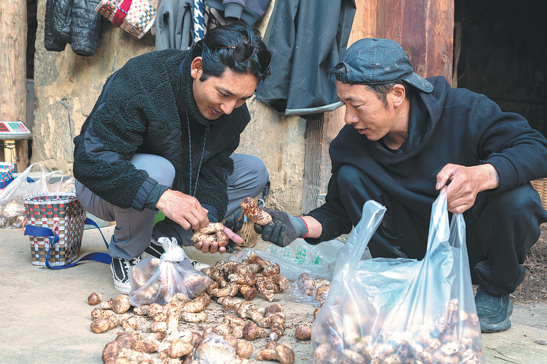
The fungus was matsutake, known in China as songrong — a delicacy grown in the mountain forests of Yunnan and popular in high-end restaurants across Asia.
For visitors accompanying Ngawang, seeing one of the world's most-prized mushrooms being foraged in the wild was a magical experience.







Editor's Pick