Ancient farming wisdom nurtures rural vitalization
Age-old agricultural values and lifestyles in step with the seasons bring prosperity, build sustainable communities in nation's countryside
By ZHAO RUIXUE in Linyi, Shandong | China Daily | Updated: 2026-08-31 09:12


As China pushes to modernize its countryside, the Ministry of Agriculture and Rural Affairs has turned to thousand-year-old farming traditions to spearhead rural vitalization.
According to research unveiled by the ministry during a national conference on rural civilization in Linyi, Shandong province, in July, four ancient concepts — agriculture (nong), people (min), timeliness (shi) and harmony (he) — account for over 80 percent of China's core agricultural heritage values.
These four concepts have been summarized as the core spirit of China's agricultural cultural heritage: valuing agriculture, putting people at the center, following seasonal farming cycles, and upholding harmony and unity.
Far from treating these ideas as historical relics, experts and local leadership across the country are proving that ancient ecological wisdom and traditional craft can serve as active economic engines for contemporary rural development.
Old crafts, modern markets
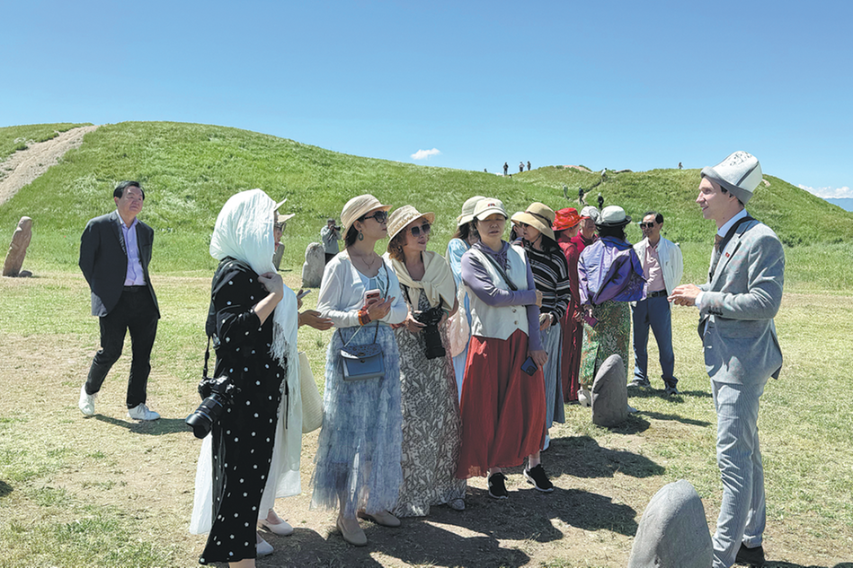
In a willow-weaving workshop in Linshu county, Shandong province, 70-year-old Yang Jinbang twists pliable willow twigs into a small gourd, his hands never pausing as he speaks.
"This variety of willow is planted at the Spring Equinox and harvested at the Minor Heat. This seasonal rule is the most basic experience summed up by our ancestors from agriculture, and we are still benefiting from it," he told a group of tourists.
Yang practices twist weaving, an ancient local technique historically tied to rural production.
"We have woven agricultural utensils for more than a thousand years, including baskets for storing hay and harvesting grain," Yang said. "In old rural days, donkeys were the main agricultural transport tool, and woven panniers were fixed on donkeys' backs to carry farm goods. Later, the weaving skills serving agricultural work gradually formed an agricultural heritage, and we kept upgrading products to fit modern life," he said.
Those same panniers once slung across donkeys were later adapted for bicycles and motorcycles. Today, local producers make dozens of categories of products, from baskets and furniture to garden decor.
Yang's workshop is a prime example of the national effort to position agricultural heritage not as a museum display, but as a wellspring for modern livelihoods.
Experts attending the rural civilization conference in Linyi cited the value of integrating agricultural heritage into the nation's modernization drive. Rural areas are increasingly recognizing that ancient agricultural wisdom can effectively support and strengthen modern rural livelihoods.





Editor's Pick